
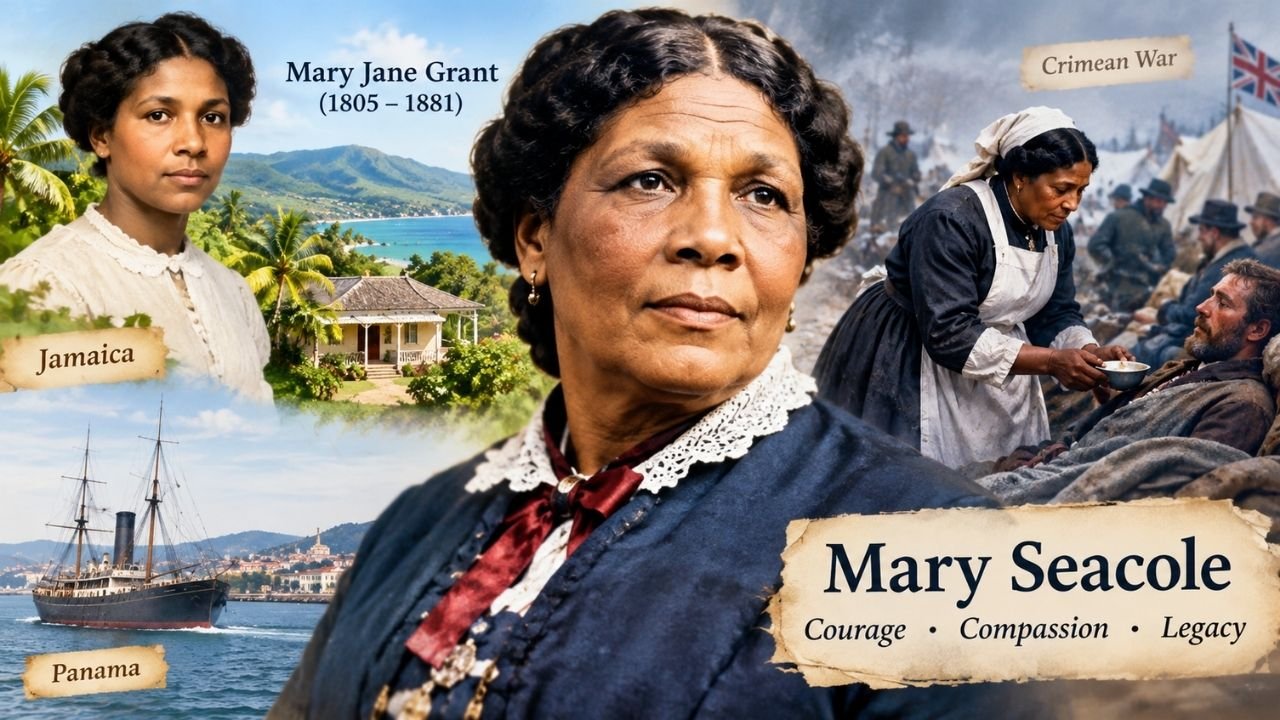
Mary Jane Grant is a name closely connected with one of the most remarkable women in nineteenth-century history. Better known as Mary Seacole, she became famous for her courage, compassion, business acumen, and dedication to caring for people during illness and war. Born in Kingston, Jamaica, in 1805, Mary Jane Grant lived in a time when opportunities for women, particularly those of mixed Jamaican and European heritage, were extremely limited. Despite these challenges, she built an extraordinary life that took her from Jamaica to Panama and eventually to the battlefields of the Crimean War.
Today, Mary Jane Grant is remembered as an important historical figure whose life spanned nursing, medicine, entrepreneurship, travel, and humanitarian service. Her story shows how determination and practical knowledge can help an individual make a lasting impact even when formal institutions do not provide support.
Who Was Mary Jane Grant?
Mary Jane Grant was the birth name of the woman later known as Mary Seacole. She was born on November 23, 1805, in Kingston, Jamaica. Her mother was a Jamaican healer known for using traditional remedies and practical medical knowledge. Her father, James Grant, was a Scottish soldier.
Growing up in this environment exposed Mary Jane Grant to healthcare from an early age. Her mother’s work especially shaped her understanding of illness, treatment, hygiene, and patient care. Rather than receiving a conventional medical education, she learned through observation, experience, and hands-on involvement.
This early exposure became the foundation for her later career. Mary Seacole’s life would eventually show that healthcare could take many forms and that compassion and practical experience could matter during epidemics and wartime.
The Early Life of Mary Jane Grant in Jamaica
Jamaica played a central role in Mary Jane Grant’s early development. During the nineteenth century, the island faced numerous infectious diseases, and medical resources were not always readily available.
Mary learned from her mother, who operated a boarding house and cared for sick people. Locally, her mother was known for her knowledge of traditional Jamaican remedies. Mary assisted her and gradually developed her own confidence in caring for patients.
Her childhood and young adulthood therefore gave her practical experience that would later become extremely important. She learned how to observe symptoms, provide comfort, prepare treatments, and maintain care for people suffering from serious illnesses.
This background also helped develop her independence. Instead of limiting herself to one profession or one location, Mary became someone willing to travel, conduct business, and respond to opportunities wherever they appeared.
Mary Jane Grant and Her Marriage
In 1836, Mary Jane Grant married Edwin Horatio Seacole. After her marriage, she became known as Seacole, a name history would eventually use to remember her.
Mary and Edwin were involved in business activities and spent part of their married life in Jamaica. However, Edwin suffered from poor health and died in 1844.
The loss of her husband was followed by the death of her mother, leaving Mary to continue her life independently. Rather than withdrawing from public life, she continued developing her skills and pursuing opportunities.
Her experiences during this period contributed to the remarkable independence that later characterized her work abroad.
Mary Jane Grant’s Experience With Disease and Healthcare
One of the most important aspects of Mary Jane Grant’s life was her experience with epidemics.
During the nineteenth century, diseases such as cholera and yellow fever could spread rapidly and cause devastating loss of life. Mary encountered these diseases during her travels and gained firsthand knowledge of caring for people in dangerous circumstances.
Her mother and her own experiences shaped her practical approach to healthcare. She understood the importance of food, cleanliness, comfort, observation, and direct assistance.
Mary’s approach was not based solely on formal medical theory. Instead, she relied heavily on experience and traditional knowledge. This combination allowed her to function effectively in places where professional medical services were limited.
Mary Jane Grant’s Journey to Panama
Travel became another defining feature of Mary Jane Grant’s life.
She eventually traveled to Panama, where she became involved in business and healthcare. Panama was an important hub for international travel and commerce, and disease posed serious risks there.
During her time there, Mary operated a business while continuing to care for people affected by illness. Her experiences with cholera were particularly significant because she witnessed how quickly the disease could spread.
Her ability to combine entrepreneurship with caregiving was unusual. She was not simply a caregiver working for an institution. She was also a businesswoman who created her own opportunities.
Her time in Panama helped prepare her for the challenges she would later face during the Crimean War.
Mary Jane Grant and the Crimean War
The Crimean War became the defining chapter of Mary Jane Grant’s historical legacy.
When Britain became involved in the conflict during the 1850s, thousands of soldiers faced terrible conditions. Wounded soldiers required medical attention, while disease, poor sanitation, inadequate supplies, and harsh environmental conditions created additional dangers.
Mary traveled to Britain and sought an opportunity to contribute to the war effort. She wanted to use her experience to help wounded and sick soldiers.
However, she faced barriers. Formal nursing organizations did not provide her with the opportunity she wanted. Instead of giving up, Mary traveled to Crimea independently.
Her determination was remarkable. She was willing to travel into a dangerous war zone rather than wait for an institution to recognize her abilities.
The British Hotel and Mary Jane Grant’s Work in Crimea
In Crimea, Mary Seacole established the British Hotel near Balaclava. Despite its name, the establishment was not simply a modern-style hotel. It provided food, supplies, accommodation, and services for people connected with the British military.
Mary also used her position to help sick and wounded soldiers.
Her work extended beyond the building itself. She traveled toward areas where soldiers were fighting or recovering, bringing assistance and supplies.
This willingness to approach dangerous areas earned her considerable respect among many soldiers. She became known for her practical courage and determination to help people, no matter the difficulties.
The British Hotel also demonstrated another important part of Mary Jane Grant’s personality: entrepreneurship. She created a sustainable business while also providing humanitarian assistance.
Mary Jane Grant as a Businesswoman
Mary Jane Grant’s story is sometimes described entirely through the lens of nursing, but she was much more than a caregiver.
She was an entrepreneur who operated businesses in several countries. Her experiences in Jamaica, Panama, and Crimea show that she was comfortable managing money, organizing supplies, interacting with customers, and adapting to unfamiliar environments.
Her entrepreneurial skills helped finance her humanitarian work.
This is an important part of understanding her legacy. Mary did not simply wait for charitable organizations to provide her with resources. She created her own opportunities and used her business activities to support her wider goals.
Her life therefore provides an early example of a woman combining business independence with social responsibility.
Mary Jane Grant’s Autobiography
Another major part of Mary Jane Grant’s legacy is Wonderful Adventures of Mrs. Seacole in Many Lands, her autobiography.
Published in 1857, the book describes her travels and experiences. It provides readers with an important first-person perspective on her extraordinary life.
The autobiography matters because it lets Mary tell her story in her own voice. It describes her experiences in different countries and her involvement in the Crimean War.
The book also demonstrates her confidence and personality. She presents herself as an independent woman willing to take risks and overcome obstacles.
Today, the autobiography remains an important historical source for understanding Mary Seacole’s life, nineteenth-century travel, and the experiences of a woman who worked across cultural and geographical boundaries.
The Historical Legacy of Mary Jane Grant
Mary Jane Grant’s legacy extends far beyond her lifetime.
Her story is now associated with several important areas of history, including nursing, Jamaican history, Black British history, women’s history, military history, and entrepreneurship.
She is particularly admired for her determination to help soldiers despite the barriers she faced.
Her life also challenges narrow definitions of healthcare. Mary Seacole was not simply someone who worked within a hospital. She provided care in homes, businesses, travel settings, epidemic environments, and war zones.
Her story illustrates the importance of practical healthcare and humanitarian action.
Why Mary Jane Grant Remains Important Today
Several reasons explain why Mary Jane Grant continues to attract historical interest.
First, her life demonstrates extraordinary independence. She traveled extensively during a period when international travel was difficult and dangerous.
Second, she combined multiple roles. She was a caregiver, entrepreneur, traveler, author, and humanitarian.
Third, she overcame institutional barriers. When she couldn’t get the opportunities she wanted through established channels, she created her own path.
Finally, her life represents the importance of courage in service to others. She willingly entered difficult environments to assist people who were sick, injured, or vulnerable.
Her story is especially relevant today because healthcare professionals and humanitarian workers continue to operate in challenging environments around the world.
Mary Jane Grant’s Place in Jamaican and British History
Mary Jane Grant is important to both Jamaican and British history.
Her Jamaican upbringing influenced her approach to healthcare, while her later experiences in Britain and Crimea connected her story to British military history.
She represents the movement of people and ideas across the nineteenth-century British world. Her life spanned several regions and cultures, showing how individuals could develop identities and careers beyond a single country.
Her achievements have also helped increase recognition of the historical contributions of women of Caribbean heritage.
Conclusion
Mary Jane Grant, better known as Mary Seacole, lived a remarkable life defined by courage, independence, compassion, and determination. Born in Jamaica in 1805, she learned practical healthcare skills from her mother and later developed her own expertise through experience with disease and travel.
You May Also Read: Jesse Mojo Shepard: Biography, Family, Career and Life
