
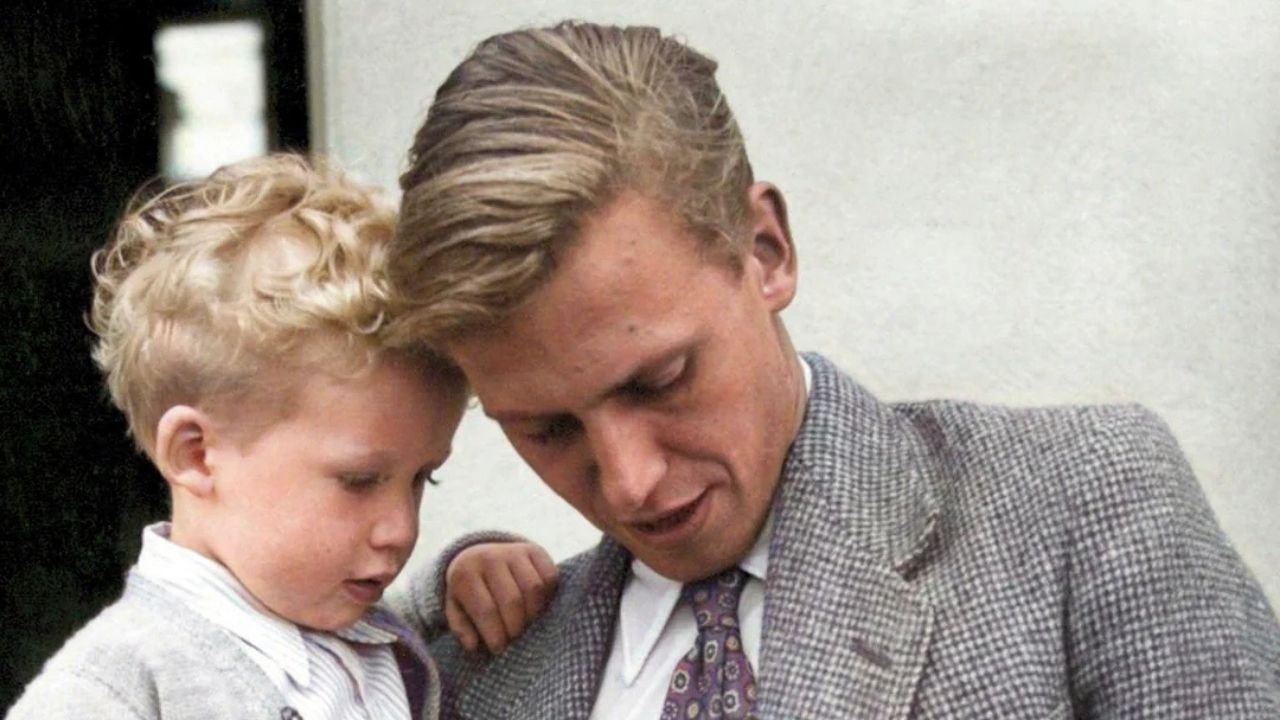
Who Is Robert Attenborough?
Robert Attenborough is a British biological anthropologist and academic researcher whose career has focused on understanding human populations, biological variation, health, genetics, evolution, and human adaptation. Unlike his famous father, broadcaster and natural historian David Attenborough, Robert has largely remained outside television and mainstream celebrity culture. His professional reputation comes primarily from his academic and research work.
Robert Attenborough has been associated with major academic institutions in both the United Kingdom and Australia. The University of Cambridge currently lists him as a Senior Fellow at the McDonald Institute for Archaeological Research within its Department of Archaeology. His research interests include biological anthropology, human evolutionary studies, and human evolutionary and behavioral ecology.
His work is particularly associated with human populations in New Guinea and Oceania, where questions involving population history, genetics, adaptation, health, and social processes have provided important areas of research.
Robert Attenborough and Biological Anthropology
To understand Robert Attenborough’s career, it helps first to understand biological anthropology. The discipline examines humans from biological and evolutionary perspectives while also considering variation between populations and the interaction between humans and their environments.
The University of Cambridge describes biological anthropology as a field that investigates human evolution and adaptation, biological diversity, population differences, health, development, behavior, and relationships between humans and other animals. It can bring together methods and ideas from genetics, archaeology, ecology, physiology, evolutionary biology, and other scientific disciplines.
Robert Attenborough’s academic interests fit within this broad field. His research has included human population biology and health, evolutionary anthropology, and anthropological and archaeological genetics. An earlier Cambridge research record describes these areas among his academic interests.
This makes his career quite different from his father’s, whose work is primarily associated with natural history broadcasting, wildlife documentaries, and environmental communication.
Robert Attenborough’s Academic Career
Robert Attenborough has had a long association with academic anthropology in Britain and Australia. Historical Australian National University records identify Robert David Attenborough, BA Camb., DPhil Oxf., as a lecturer in the university’s academic staff records.
His connection with the Australian National University is particularly significant because ANU has been an important center for anthropology and research concerning Australia, Papua New Guinea, and the wider Pacific.
ANU’s Emeritus Faculty records list Robert Attenborough under biological anthropology and music, reflecting his long-standing academic association with the institution.
Throughout his career, his research has contributed to the study of human populations and biological anthropology, particularly in relation to New Guinea.
Robert Attenborough at the University of Cambridge
The University of Cambridge remains an important part of Robert Attenborough’s professional profile. Cambridge’s Department of Archaeology currently lists him as a Senior Fellow of the McDonald Institute for Archaeological Research.
The McDonald Institute supports archaeological and related research across a wide range of subjects. Cambridge’s Department of Archaeology describes its research community as covering areas including archaeology, biological anthropology, human evolution, primatology, and archaeological science.
Robert’s inclusion among the department’s biological anthropology and human evolutionary studies researchers demonstrates that his academic identity is firmly rooted in research rather than public entertainment.
His Cambridge affiliation is also significant because the university has developed substantial expertise in biological anthropology and human evolutionary studies. The department’s work covers subjects ranging from human evolutionary history to the behavior and biological characteristics of living populations.
Robert Attenborough and Research in New Guinea
One of the most important themes associated with Robert Attenborough is research involving New Guinea.
New Guinea has long been important to anthropologists because of its extraordinary cultural, linguistic, environmental, and biological diversity. Studying its populations can help researchers investigate migration, adaptation, population history, genetics, health, and interactions between communities and their environments.
Robert Attenborough has contributed to this body of scholarship. ANU research records list recent publications involving Attenborough and collaborators examining the deep histories of New Guinea through genetics.
For example, a 2025 chapter by Robert Attenborough, Gavin Jacobs, and P. Kusuma examined human adaptation to malaria and diverse environments in New Guinea. Other chapters involving Attenborough and colleagues addressed local demography, social processes, regional population history, and archaic genetic introgression.
These publications illustrate the continuing relevance of genetic and biological approaches to understanding the history of human populations in the region.
His Work in Human Population Biology
Human population biology is another important area in Robert Attenborough’s academic work.
The subject examines populations from biological and evolutionary perspectives. Researchers may investigate genetic diversity, population movement, disease, nutrition, reproduction, health, adaptation, and demographic change.
For researchers working in regions such as New Guinea, these questions can be particularly valuable because populations have experienced distinctive environmental conditions and complex histories of migration and interaction.
Robert Attenborough’s research has brought together anthropology and biological science to examine such questions. His work therefore sits at an intersection between traditional anthropology and scientific approaches involving genetics and population biology.
This interdisciplinary approach is characteristic of modern biological anthropology, where researchers may combine archaeological evidence, genetic information, demographic data, ecological observations, and anthropological perspectives.
Robert Attenborough’s Publications and Research Contributions
Robert Attenborough has contributed to academic publications dealing with biological anthropology and the population history of Papua New Guinea and surrounding regions.
One notable earlier contribution was an introduction to chapters concerning biological anthropology and population genetics in Papuan Pasts: Cultural, Linguistic and Biological Histories of Papuan-Speaking Peoples, published in 2005. The work brought together cultural, linguistic, and biological approaches to the history of Papuan-speaking populations.
His more recent research demonstrates that his academic interests have continued into questions surrounding genetics, population history, adaptation, and human diversity.
ANU’s research portal currently lists several 2025 chapters involving Attenborough that examine the deep history of West New Guinea from different genetic and demographic perspectives.
Together, these publications show a career that has remained closely connected to biological anthropology and the study of human populations.
Robert Attenborough and David Attenborough
Robert Attenborough is also known to many people because of his family connection to David Attenborough, one of Britain’s best-known natural history broadcasters.
David Attenborough became internationally recognized through decades of television work documenting wildlife and the natural world. Robert followed a very different professional path, choosing academic anthropology rather than broadcasting.
This distinction matters because internet searches for the Attenborough family can sometimes mix up different family members. Robert’s professional identity should not be confused with his father’s or with that of other well-known members of the Attenborough family.
Robert’s own career is primarily associated with universities, anthropology, research publications, and academic study.
Robert Attenborough’s Private Life
Compared with his famous father, Robert Attenborough has maintained a relatively low public profile.
Substantially more reliable public information exists about his academic career than about his private life. University and research sources concentrate on his professional activities, research interests, publications, and institutional affiliations rather than personal matters.
For that reason, treat claims about Robert Attenborough’s exact personal circumstances carefully when they come from unofficial biography websites or unsourced articles.
A useful distinction for readers is between information documented by universities and academic publications and information repeated by entertainment or biography websites without clear sourcing.
Why Robert Attenborough’s Work Matters
Robert Attenborough’s research illustrates how biological anthropology can help researchers understand the history and diversity of human populations.
Research into population genetics and human adaptation can provide insight into how communities responded to environmental pressures and how populations changed over generations. In regions such as New Guinea, these questions intersect with archaeology, linguistics, genetics, geography, and cultural anthropology.
Cambridge describes biological anthropology as a field that can contribute to understanding human origins, worldwide biological variation, health, disease susceptibility, human ecology, and adaptation.
Robert’s work therefore represents a research tradition that attempts to understand humanity through multiple forms of evidence rather than through a single discipline.
Robert Attenborough’s Legacy in Anthropology
Robert Attenborough’s academic legacy is connected to his contributions to biological anthropology, human population biology, genetics, and research on New Guinea.
His career has also linked two major academic environments: the University of Cambridge in Britain and the Australian National University in Australia. His research and publications demonstrate an enduring interest in human populations and the biological dimensions of human history.
His continued presence in Cambridge’s research community also indicates that his academic work remains relevant to biological anthropology and human evolutionary research. Cambridge currently lists him as a Senior Fellow at the McDonald Institute for Archaeological Research.
Frequently Asked Questions About Robert Attenborough
Who is Robert Attenborough?
Robert Attenborough is a British biological anthropologist and academic researcher focused on human populations, genetics, health, evolution, and adaptation.
Is Robert Attenborough related to David Attenborough?
Yes. Robert Attenborough is associated with the Attenborough family and is known publicly in part because of his connection to broadcaster and natural historian David Attenborough.
What does Robert Attenborough do?
His career has focused on biological anthropology and research into human population biology, genetics, health, evolution, and human adaptation.
Where is Robert Attenborough associated academically?
The University of Cambridge currently lists Robert Attenborough as a Senior Fellow at the McDonald Institute for Archaeological Research. He has also had a long academic association with the Australian National University.
What is Robert Attenborough known for?
He is particularly known for academic research in biological anthropology, human population biology, population genetics, and the history and adaptation of populations in New Guinea.
Conclusion
Robert Attenborough has built a career that is considerably different from the public-facing career of his famous father, David Attenborough. Rather than becoming a television personality, Robert pursued biological anthropology and academic research.
You May Also Read: Lorraine Taylor: Her Life, Family and Connection to Ike Turner
