
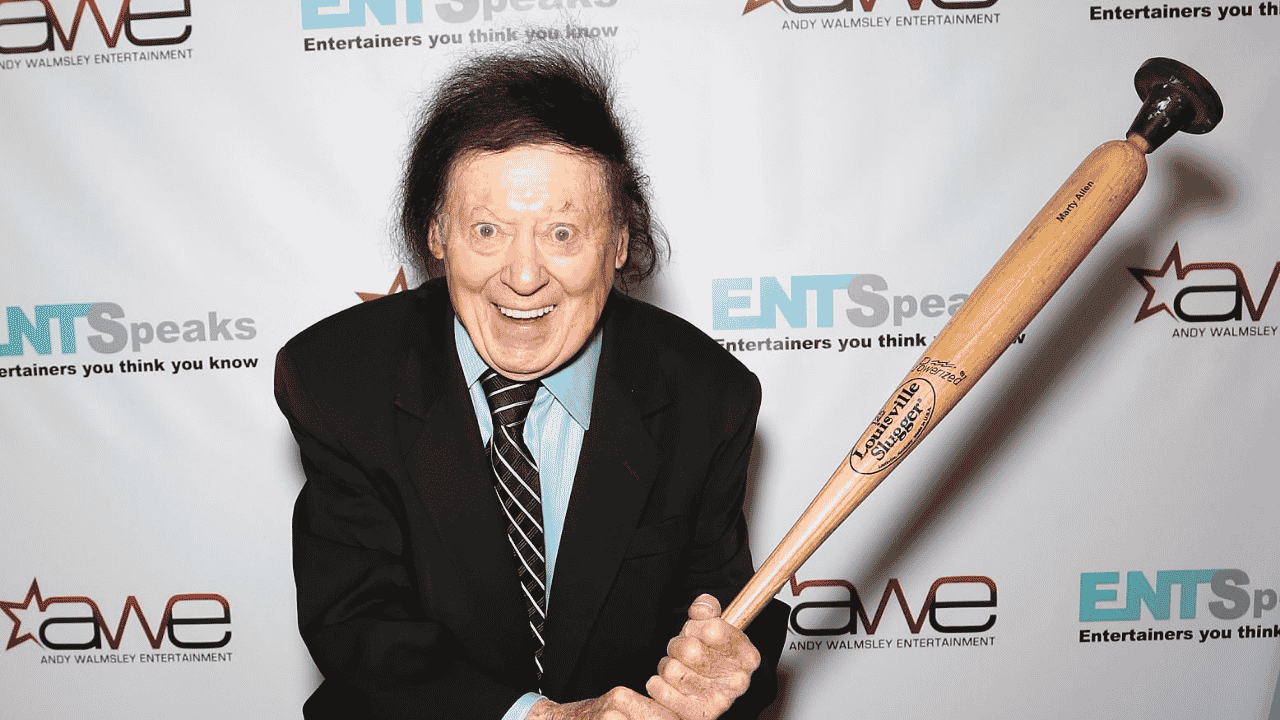
Marty Allen was one of the most recognizable comedians and entertainers of American television during the golden age of variety and game shows. Known for his energetic personality, distinctive appearance, memorable expressions, and the famous phrase “Hello dere!”, Allen built a career that lasted for decades. He became especially well known as one half of the comedy team Allen & Rossi, alongside Steve Rossi, and later continued performing as a solo entertainer.
For audiences interested in classic American comedy, the story of Marty Allen Comedian, is an interesting look at how performers moved from nightclubs and live theater to national television. His career also demonstrates the lasting appeal of traditional comedy based on personality, timing, physical humor, and audience interaction.
Who Was Marty Allen?
Marty Allen was an American comedian and actor whose professional career spanned many decades. He was born Morton David Alpern on March 23, 1922, in Pittsburgh, Pennsylvania. He eventually adopted the professional name Marty Allen and became a familiar face to television audiences across the United States.
Allen developed his entertainment career during a period when comedians frequently performed in nightclubs, theaters, hotels, and variety shows. Television was rapidly becoming a major form of entertainment, and performers who could connect with a live audience had an opportunity to reach millions of viewers.
Allen had a particularly recognizable stage personality. His expressive face, energetic delivery, and enthusiastic manner helped distinguish him from many other comedians of his generation. His catchphrase “Hello dere!” became closely associated with his public persona.
Early Life and Military Service
Before becoming a professional comedian, Marty Allen had experiences that were very different from his later life in show business. During World War II, he served in the U.S. Army Air Forces.
His military service became an important part of his personal history. During his time in the service, Allen was involved in an incident in which he helped prevent a dangerous aircraft-fueling fire. He was subsequently awarded the Soldier’s Medal for bravery.
After the war, Allen began moving toward entertainment. Like many performers of his era, he developed his skills through live performance rather than beginning with television. This experience helped him learn the importance of timing, audience response, and improvisation.
The Beginning of Marty Allen’s Comedy Career
Allen’s early career included work with other performers before he achieved his greatest success with Steve Rossi. He performed in nightclubs and worked as an opening act for established entertainers.
During the 1950s, television was becoming increasingly important to American popular culture. Variety programs provided comedians with opportunities to reach audiences far larger than those available through individual theaters or nightclubs.
Allen’s lively personality proved particularly effective on television. His comedy was easy to recognize, visually expressive, and suitable for variety programming. These qualities eventually helped him become a frequent television performer.
Marty Allen and Steve Rossi
The most important partnership in Marty Allen’s career was his comedy team with Steve Rossi. The duo became known professionally as Allen & Rossi.
Allen & Rossi became popular during the late 1950s and 1960s. Their act relied on comic dialogue, character interaction, energetic delivery, and carefully developed routines. The pair became a successful nightclub and television act at a time when comedy teams were an important part of American entertainment.
Their television exposure helped establish them as national celebrities. They made numerous appearances on major programs, most notably The Ed Sullivan Show. The Television Academy has recorded Allen’s memories of performing on the program with Rossi, including a particularly memorable appearance following the Beatles.
Allen & Rossi’s success illustrates the importance of television variety shows during this period. A single appearance on a major national program could introduce a performer to millions of households.
Marty Allen on The Ed Sullivan Show
One of the major highlights of Marty Allen’s career as a comedian was his connection with The Ed Sullivan Show.
The program was one of the most influential variety shows in American television history. It presented musicians, comedians, actors, dancers, acrobats, and other performers to a national audience. The Television Academy describes the program as a major television institution that ran for more than two decades.
Allen’s energetic performance style was a natural fit for the program. He and Steve Rossi appeared on the show many times, gaining exposure that helped make Allen a household name.
Allen later recalled one appearance in which he and Rossi performed after the Beatles. The atmosphere was extremely loud because of the excitement surrounding the British group. Allen responded with his characteristic improvisational humor, demonstrating the quick thinking that was an important part of his performance style.
The Meaning Behind the Catchphrase “Hello Dere!”
When people remember Marty Allen, one of the first things they often associate with him is his phrase “Hello dere!”
The expression became an important part of his comic identity. Allen’s delivery was just as important as the words themselves. His voice, facial expressions, gestures, and physical energy transformed a simple greeting into a recognizable comedy trademark.
Catchphrases can be powerful tools for entertainers because they give audiences something immediately identifiable. Allen understood how to build a character around repeated expressions and mannerisms without losing the spontaneity that made live comedy enjoyable.
His distinctive appearance also contributed to his recognizability. His hair, facial expressions, animated movements, and enthusiastic delivery made him instantly identifiable on television.
Marty Allen’s Television Career
Although Allen is strongly associated with Allen & Rossi, his television career continued after the comedy partnership ended.
He appeared on numerous television programs, including variety shows, game shows, and entertainment programs. His credits included appearances connected with programs such as Hollywood Squares, Password, Match Game, I’ve Got a Secret, and What’s My Line?
This variety of appearances demonstrated Allen’s versatility as an entertainer. He could perform comedy, participate in panel-style programs, interact with hosts, and entertain audiences without relying exclusively on a single scripted routine.
His television career also benefited from his ability to create an immediate connection with audiences. Television performers during this period often needed to establish their personality quickly, and Allen’s recognizable character made that possible.
Marty Allen in Film and Acting
Allen also worked outside traditional television comedy. He appeared in films and took acting roles during his career.
One notable project was The Last of the Secret Agents?, a 1966 comedy film in which Allen appeared with Steve Rossi. The movie reflected the popularity of comedy teams and spy-themed entertainment during the 1960s.
His acting work allowed Allen to demonstrate that his talents extended beyond nightclub routines. Nevertheless, television remained the medium most strongly associated with his public image.
Marty Allen and Classic Comedy
Marty Allen may appear unusual, but it can be connected in an SEO context with searches relating to Marty Allen’s comedy and entertainment works.
Marty Allen’s body of work represents an important period in the development of American popular comedy. His career included live performances, television appearances, comedy partnerships, acting, and later stage work.
Unlike modern comedians who may build audiences primarily through streaming platforms and social media, Allen’s generation depended heavily on theaters, nightclubs, television networks, and personal appearances.
His career therefore provides an example of how entertainers could build a recognizable public identity before the internet era. Television exposure, repeated appearances, and live performances were essential tools for establishing a long-term career.
Marty Allen’s Later Career
After his partnership with Steve Rossi ended, Marty Allen continued working as an entertainer rather than retiring from show business.
In later years, he performed with his wife, singer and songwriter Karon Kate Blackwell. Together they developed a musical-comedy act and performed in venues around the United States, including Las Vegas.
This later stage of Allen’s career demonstrated his continuing commitment to live entertainment. Even after achieving fame through television, he continued to perform directly for audiences.
For a performer whose career began in an era dominated by live entertainment, returning to the stage remained a natural part of his professional life.
Marty Allen’s Personality and Comedy Style
Marty Allen’s comedy style was strongly connected to his personality.
He was not dependent solely on complex written jokes. Instead, much of his appeal came from the combination of verbal humor, physical comedy, facial expressions, timing, enthusiasm, and audience interaction.
His approach was particularly effective in variety television because viewers could understand his character almost immediately.
Allen’s comedy also belonged to an era in which entertainers often developed larger-than-life stage personalities. Audiences did not simply watch a comedian tell jokes; they became familiar with the comedian as a recognizable character.
This was one of Allen’s greatest strengths.
Why Marty Allen Remains Important to Comedy History
The history of American comedy contains many performers whose fame was connected to a particular period of television. Marty Allen is one of those entertainers.
His career demonstrates the transition from traditional live comedy to mass television entertainment. He worked in nightclubs, performed with a successful comedy partner, appeared on major variety programs, acted in films, and continued entertaining audiences for many years.
His association with The Ed Sullivan Show is especially significant because the program was one of the major platforms through which American audiences discovered entertainers. The show famously featured performers ranging from comedians and dancers to major musical artists, making it an important part of American television history.
Allen’s appearances placed him within that larger entertainment tradition.
Marty Allen’s Personal Life
Marty Allen was married twice. His first wife was Lorraine Allen. Later, he married Karon Kate Blackwell, with whom he performed during the later part of his career.
His relationship with Blackwell was also professionally significant because the two worked together as entertainers. Their performances combined comedy and music and allowed Allen to continue appearing before live audiences later in life.
This partnership became an important part of his final decades as a performer.
Philanthropy and Work Beyond Entertainment
Allen was also involved in charitable activities during his life. He supported causes and organizations connected with health, veterans, and community welfare.
His military background remained meaningful to him, and he participated in entertainment activities for military audiences and veterans.
This aspect of his life shows that his public role was not limited to performing for commercial entertainment. Like many entertainers of his generation, he also used his celebrity and performance skills to support charitable causes.
Marty Allen’s Death
Marty Allen died on February 12, 2018, in Las Vegas, Nevada. He was 95 years old.
His death marked the end of a career that had lasted for more than half a century. By the time he died, he had experienced several major transformations in American entertainment, from the rise of television to the changing nature of live comedy.
He remained active as a performer remarkably late in life, reflecting his dedication to entertainment and his ability to connect with audiences.
The Legacy of Marty Allen
The legacy of Marty Allen can be understood through several important parts of his career.
First, his partnership with Steve Rossi helped establish Allen & Rossi as a memorable comedy team of the mid-20th century.
Second, his appearances on The Ed Sullivan Show connected him with one of the most important television programs of his era.
Third, his catchphrase “Hello dere!” became an enduring part of his identity.
Finally, his long career demonstrated the value of adaptability. Allen successfully moved between nightclubs, television, film, game shows, variety programs, and live stage performances.
For students of comedy history, his career is particularly interesting because it shows how entertainment worked before the modern digital era. Performers had to build audiences through repeated television appearances and live shows, and maintaining a career required constant interaction with the public.
Conclusion
Marty Allen was much more than a comedian with a memorable catchphrase. He was a veteran entertainer whose career reflected the development of American popular entertainment throughout the second half of the twentieth century.
You May Also Read: Laura Deibel: Biography, Marriage to Tim Allen, Family, Divorce, and Life Today
